

If you’re a new parent considering a baby carrier, safety is probably your first question. The short answer: yes, babywearing is safe — when done correctly. Here’s what you need to know to carry your baby with complete confidence.
The Short Answer
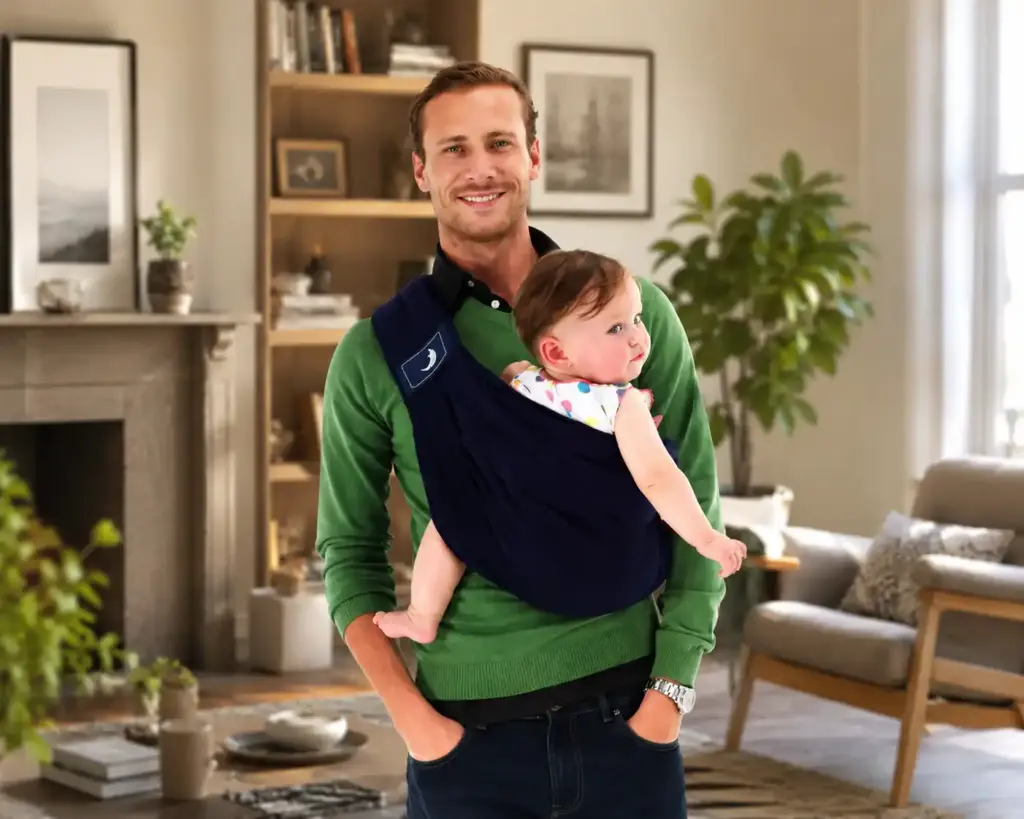
Babywearing has been practised across cultures for thousands of years. When a carrier is used correctly — with the right positioning for your baby’s age and size — it is not only safe, but actively beneficial for your baby’s physical and emotional development.
The key word is correctly. Like a car seat or a highchair, a baby carrier is only as safe as the way it’s used.
What Makes a Carrier Safe?
Safe babywearing comes down to two things: the carrier itself and how you use it.
The Carrier
A safe carrier should:
- Keep your baby in the ergonomic M-position (knees higher than bottom, thighs fully supported)
- Provide proper head and neck support for babies who cannot yet hold their head independently
- Hold your baby close enough that you can kiss the top of their head without bending
- Keep your baby’s airway clear and visible at all times
- Be made from fabric that has been tested to appropriate safety standards
Avoid carriers where your baby is positioned with their legs dangling straight down (crotch-dangler carriers) — these place stress on the hip joints and spine.
How You Use It
Even a well-designed carrier can become unsafe through incorrect use. Always:
- Read the instructions fully before putting your baby in
- Check all buckles and rings are secured before lifting
- Ensure your baby’s face is never pressed against your body or buried in fabric
- Check your baby frequently during carries, especially when they are sleeping
- Avoid babywearing when cooking over a hob, drinking hot liquids, or exercising vigorously
The TICKS Guidelines
The UK’s babywearing community and health professionals widely use the TICKS checklist as a quick safety reference:
T — Tight: The carrier should be tight enough that your baby cannot slump. Loose fabric is a hazard.
I — In view at all times: You should be able to see your baby’s face by simply glancing down.
C — Close enough to kiss: Your baby’s head should be close enough that you can kiss it without bending.
K — Keep chin off chest: Your baby’s chin should never be pressed down onto their chest, as this can restrict the airway. There should always be a finger’s width of space.
S — Supported back: Your baby’s back should be supported in a natural position, with their tummy and chest against yours.
Is Babywearing Safe for Newborns?
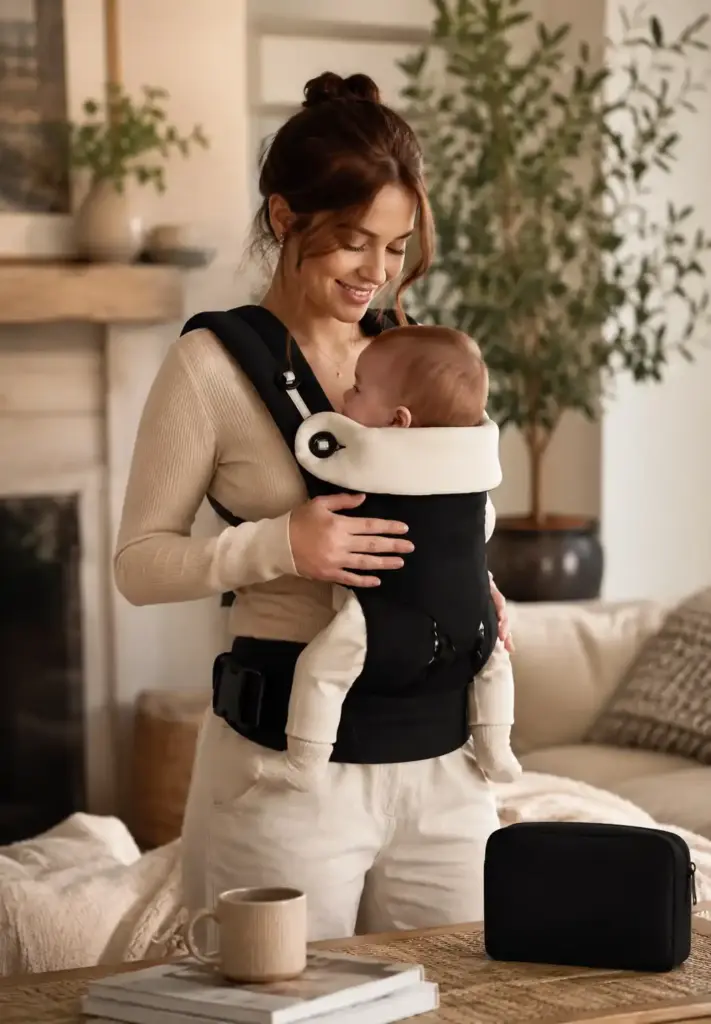
Yes — with the right carrier and correct positioning. Newborns have limited head and neck control, which means you need a carrier that offers full head support and keeps the spine in its natural C-curve (not straightened out).
The safest options for very young babies include:
- Stretchy wraps with a newborn hold
- Ring slings in a cradle or newborn carry
- Structured carriers with a newborn insert
Always ensure your newborn’s face is visible and their airway is clear. If you are ever unsure whether your baby is positioned correctly, stop and ask for help before continuing.
Is It Safe for Premature Babies?
Skin-to-skin contact — the basis of babywearing — has been extensively studied in the context of premature babies. Known as kangaroo care, it has been shown in clinical studies to support temperature regulation, heart rate stability, and weight gain in premature infants.
That said, premature babies require extra care and specific guidance. Always consult your neonatal team before babywearing with a premature baby, and look for specialist support from a trained babywearing consultant.
Common Concerns — Answered
“Won’t it spoil my baby?” No. Babies are neurologically and physiologically designed to be held. Closeness to a caregiver reduces cortisol (the stress hormone) and supports emotional regulation. You cannot spoil a baby by carrying them.
“Is it bad for their hips?” Quite the opposite. When used correctly with an ergonomic carrier, babywearing actively supports healthy hip development. Look for carriers endorsed by the International Hip Dysplasia Institute.
“Can I wear my baby on my back?” Back carrying is safe once your baby has strong head and neck control — typically around 4 to 6 months, depending on the individual child. Always follow the guidance for your specific carrier, and consider a babywearing consultation for back carries if you are new to it.
“What about my back? Is it safe for me?” An ergonomic carrier worn correctly should not cause back pain. The key is to position your baby high (they should be at kissable height) and ensure the waistband sits on your hips, not your lower back. If you experience pain, check your carrier fit or consult a babywearing consultant.
How Weanjay Supports Safe Babywearing
Every carrier in the Weanjay range is designed to meet strict ergonomic and safety standards. Our carriers support the M-position from the earliest days, include head support for newborns and young infants, and are made from tested, breathable materials.
We also believe that a safe carry is a confident carry — which is why we include clear, step-by-step instructions with every carrier, and our customer team is always available to answer your questions.
View the Weanjay carrier range →
Where to Get More Support
If you’d like hands-on guidance, the UK has an excellent network of babywearing consultants and sling libraries. A sling library lets you try different carriers before buying, often with expert guidance included. Search for your nearest library at slingpages.co.uk.
Written by the Weanjay Team | Last updated: 2026