

Beyond the convenience of having your hands free, babywearing offers a remarkable range of benefits — for your baby’s development, for your own wellbeing, and for the bond you share. Here’s what the research actually says.
1. It Supports Healthy Brain Development
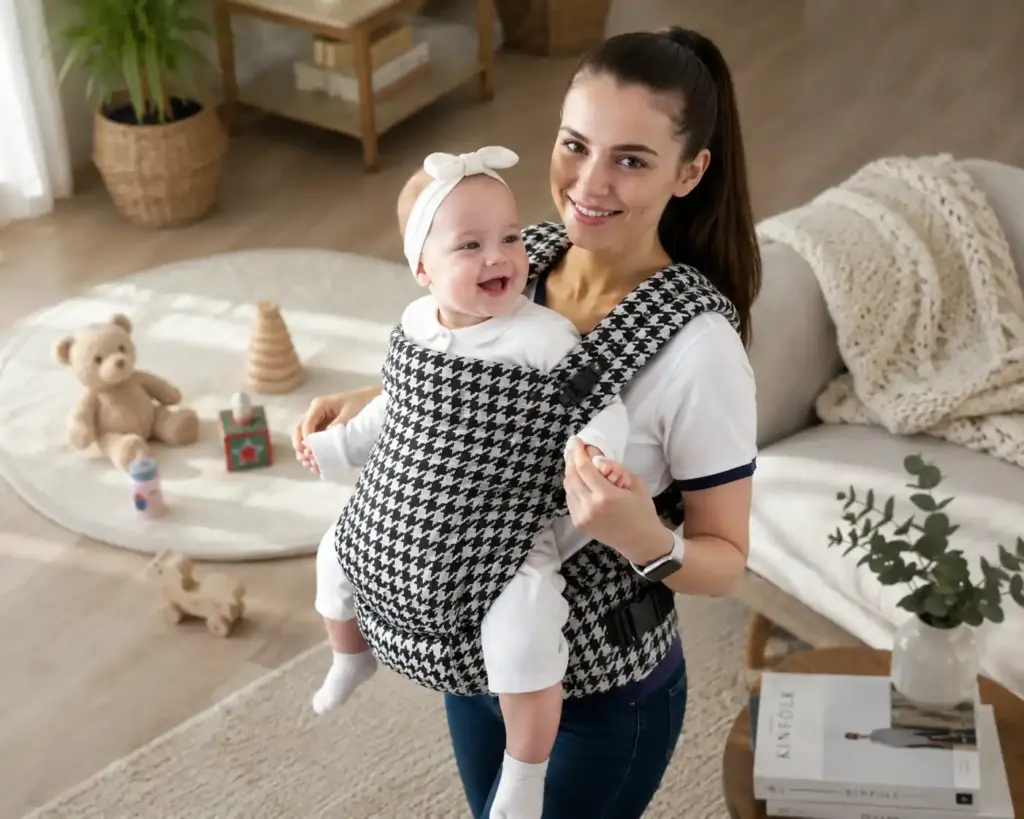
When a baby is carried, they are at the centre of their caregiver’s world — exposed to conversations, facial expressions, movement, sounds, and the rhythm of everyday life. This constant, gentle stimulation is ideal for developing brains.
Research published in the journal Pediatrics found that babies who are held and carried more during the early months show more advanced neurological development. The movement of a carrier — mimicking the sensation of being in the womb — also helps to regulate the nervous system, which promotes calmer, more alert states in infants.
Put simply: carried babies experience more of the world, and their brains grow accordingly.
2. It Reduces Crying — Significantly
A landmark study published in Pediatrics found that babies who were carried for an additional three hours per day cried 43% less overall, and 54% less in the evening — the classic “witching hour” that leaves so many new parents exhausted.
Crying is a baby’s primary communication tool. When a baby is held close, they feel secure and their need to cry diminishes. For parents navigating the early weeks, this alone can be transformative.
3. It Promotes Secure Attachment
The first year of life is a critical window for the development of attachment — the emotional bond between a baby and their caregiver that shapes relationships throughout life. Babywearing creates sustained, responsive physical contact that actively supports this process.
When a baby is carried, they experience thousands of micro-interactions: eye contact, voice, smell, touch, and the caregiver’s heartbeat. These interactions help the baby develop a secure base from which to explore the world — with confidence, curiosity, and resilience.
Crucially, babywearing supports attachment for all caregivers, not just the birthing parent. Fathers, adoptive parents, and other primary carers who wear their babies build the same deep bonds.
4. It Supports Healthy Hip Development
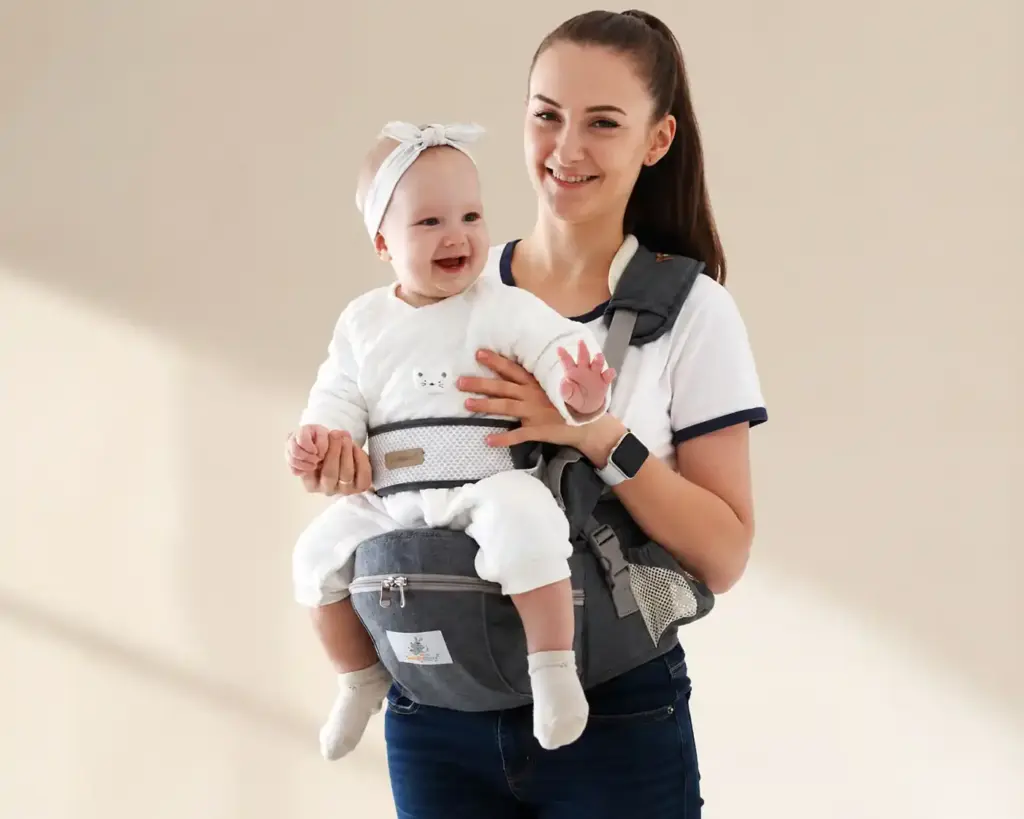
An ergonomic baby carrier holds the baby in the M-position — knees higher than the bottom, thighs fully supported. This position mirrors the natural posture of a baby’s hips and pelvis, and actively supports the correct formation of the hip socket.
The International Hip Dysplasia Institute endorses ergonomic babywearing as one of the most effective ways to promote healthy hip development in infants. Given that hip dysplasia affects approximately 1 in 10 babies in the UK to some degree, this benefit is not a small one.
5. It Improves Postnatal Mental Health
The postnatal period can be emotionally complex. Hormonal shifts, sleep deprivation, social isolation, and the demands of a newborn create the conditions for postnatal anxiety and depression in a significant proportion of new parents.
Babywearing has been shown to support maternal mental health in several ways. The physical closeness triggers the release of oxytocin — the bonding hormone — which has a measurable calming and mood-lifting effect. Being able to meet your baby’s needs quickly and effectively also builds parental confidence, reducing anxiety.
For parents experiencing low mood or anxiety, babywearing won’t replace professional support — but it can be a meaningful part of a wider approach to wellbeing.
6. It Helps Babies Gain Weight
For newborns — particularly those born small, premature, or with feeding challenges — weight gain is a priority. Skin-to-skin contact through babywearing has been consistently shown to support weight gain by stabilising the baby’s temperature, reducing energy expenditure on crying, and stimulating feeding hormones.
Kangaroo care — essentially babywearing for premature babies — is now standard practice in neonatal units across the UK and has been credited with dramatically improving outcomes for vulnerable newborns.
7. It Makes Life More Manageable
This last benefit is simple, practical, and not to be underestimated: babywearing gives you back your hands.
Being able to walk, cook (away from the hob), do the school run, work from a standing position, or simply have a cup of tea while your baby sleeps against your chest is not a small thing. It is, for many parents, the difference between a manageable day and an overwhelming one.
The practical freedom offered by a good carrier — especially during the fourth trimester — can have a profound impact on a parent’s ability to cope, recover, and actually enjoy those early months.
The Right Carrier Makes All the Difference
To experience these benefits fully, you need a carrier that fits well, supports your baby’s posture, and is comfortable enough for you to wear for extended periods. That’s exactly what we’ve designed the Weanjay range to do.
From ergonomic soft carriers for the newborn days to hip seat carriers that keep up with an active toddler, every Weanjay carrier is built around the science of babywearing — so you can feel confident that every carry is doing good.
Written by the Weanjay Team | Last updated: 2026